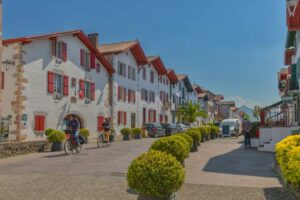

The Basque Country is a tiny enclave in the Pyrenees, between France and Spain. Despite its size and localization, its culture bears little resemblance to that of its neighbors. For starters, its unique language, Euskara, has no connection with any other known language in Europe or elsewhere.
Given its secluded location in the Pyrenees, it has suffered little influence from major cultures that swept across Europe, such as the Romans or the Moors. Today, the Basque Country is an autonomous community of Spain with a population of about 2.2 million, and receives nearly twice as many visitors each year. If you’re about to become one of them, here’s what you can’t miss and how you can plan your vacation days with activities.
Vitoria-Gasteiz
Vitoria Gasteiz is the capital of the Basque Country and a convenient starting point for explorers. It’s isolated and quite far away from the sea, which is why many visitors bypass it. It’s a huge mistake, though. Its beautifully preserved old town dates back to the 12th century. The Cathedral of Santa Maria at the top of the hill is its most famous landmark, though it also has a vast array of museums and historical buildings. Better still for wine lovers, Vitoria-Gasteiz is right next to Spain’s most famous wine region, Rioja Alavesa.
Rioja Alavesa
Here’s where one of the best DOC wines in Spain, La Rioja, is made. Indeed, the city is all about wine, with hundreds of wineries and vineyards around the community. The region has quite a few villages, of which Laguardia stands out. It has unique bodegas and labyrinthine streets towards the top of the hill, where an ancient castle oversees the village. Depending on how long visitors plan to stay, it’s also possible to explore neighboring villages like San Domingo de la Calzada, Najera, and Navarrete, all of which are worthy of a day trip.
Laguardia
Next to Rioja Alavesa, there’s the medieval town of Laguardia, with buildings dating back to the 10th century. Its fortified walls and churches bear testimony to a past of battles and successive invasions. Initially, Laguardia belonged to the Kingdom of Navarre, but it has since been ruled by several kings. Laguardia’s medieval legacy is still alive in its cobblestone streets of the old town and in the churches of Santa Maria de los Reyes and San Juan Bautista. Ancient underground wine cellars and traditional cuisine with local produce ensure a delicious experience for everyone.
French Basque Country
The French Basque Country is in the Basque Country’s northern region, with picturesque cities such as Bayonne, Biarritz, and Saint-Jean-de-Luz. Biarritz is a popular destination for surfing, other water sports, and fishing. The ancient fishing village of Port Vieux also deserves a visit, especially for those who love fresh seafood. Bayonne is a charming town between the Adour and Nive rivers, filled with cafes and restaurants along cobblestone streets by their banks. Once there, visitors must try Bayonne’s unique chocolate and other local delicacies.
Bilbao
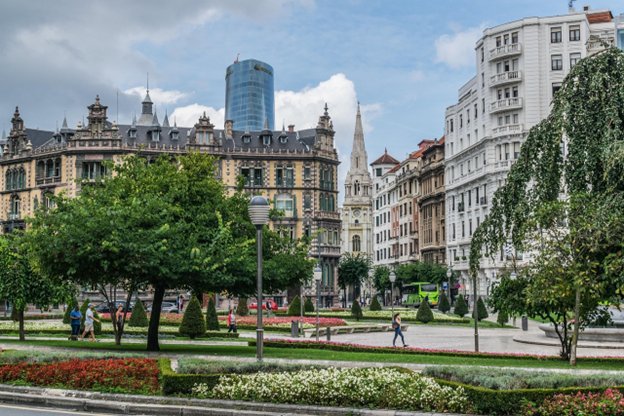
Bilbao is a port city that used to be known for its heavy industry (and pollution). Thankfully, things have changed a lot in the past few years. Bilbao gained the Guggenheim Museum and invested top dollar to improve its public transportation and urban cleaning systems. The city’s old town has been revitalized to restore its atmospheric, pedestrian-friendly streets. The Casco Viejo, as locals call it, is also famous for its pintxos (finger-shaped snacks) bars.
Mundaka
At a short driving distance from Bilbao lies the fishing town of Mundaka, with some of the most beautiful landscapes in the region. In fact, the entire city is within the Urdaibai Biosphere Reserve, which explains its nearly pristine nature. It’s also a must-visit for surfers, as it has one of the longest left-hand waves worldwide. Architecture lovers will enjoy a 15th-century church (the Iglesia de Santa Maria de Asunción) and the Ermita de Santa Catalina. The Mirador de la Atalaya is the best place for getting aerial views of the region.
Donostia-San Sebastian
Once a holiday destination for European royalty and nobility, Donostia-San Sebastian remains one of the most beautiful and sophisticated resorts in the country. The city was founded in the 12th century, though most of it was rebuilt in the French style in the 19th century. Famous beaches include Zurriola, La Concha, and Ondarreta. For local cuisine, visitors must head to the Basque Culinary Center. The city is also part of the Northern Way to Santiago, and right next to the “cider capital”, Astigarraga, making it one of the tastiest destinations in the region.
Lezo
A few kilometers outside of Donostia-San Sebastian, there’s Lezo, a picturesque town by the banks of the Oiartzun River. The architecture somehow blends Renaissance and Gothic styles, evident in its most important landmarks and throughout the streets of its old town. Lezo is surrounded by lush natural scenery, including mountains and well-preserved forests. Unsurprisingly, it’s becoming an increasingly popular destination among those who love outdoor sports, such as hiking or climbing, for instance.
Pasajes San Juan
Here’s another gem nestled by the banks of the Oiartzun River. Pasajes San Juan is a traditional, charming fishing village, known for its vividly painted fishing houses. Albeit rustic, the town also has Renaissance buildings, a palace, and a square, legacies of the Miranda family. Local cuisine mainly consists of fresh seafood, and visitors can try the best of it in the old town. Top tourist activities include crossing the bay between Pasajes San Juan and Pasai San Pedro via ferryboat, which can be particularly stunning at sunset.
Ondarroa
Ondarroa is a coastal city in the Biscay region, where the Artibai River meets the ocean. It has one of the most interesting architectures in the Basque Country, thanks to its mixture of Renaissance and Gothic buildings and modern landmarks signed by Santiago Calatrava. Visitors can also climb to the top of Likona Tower for privileged views of the city. Must-see destinations include Puente Viejo (and the other historical bridges), the Santa Maria church, and the Saturraran Beach.